Free early access
Keep rental income, expenses, receipts and EOFY records together
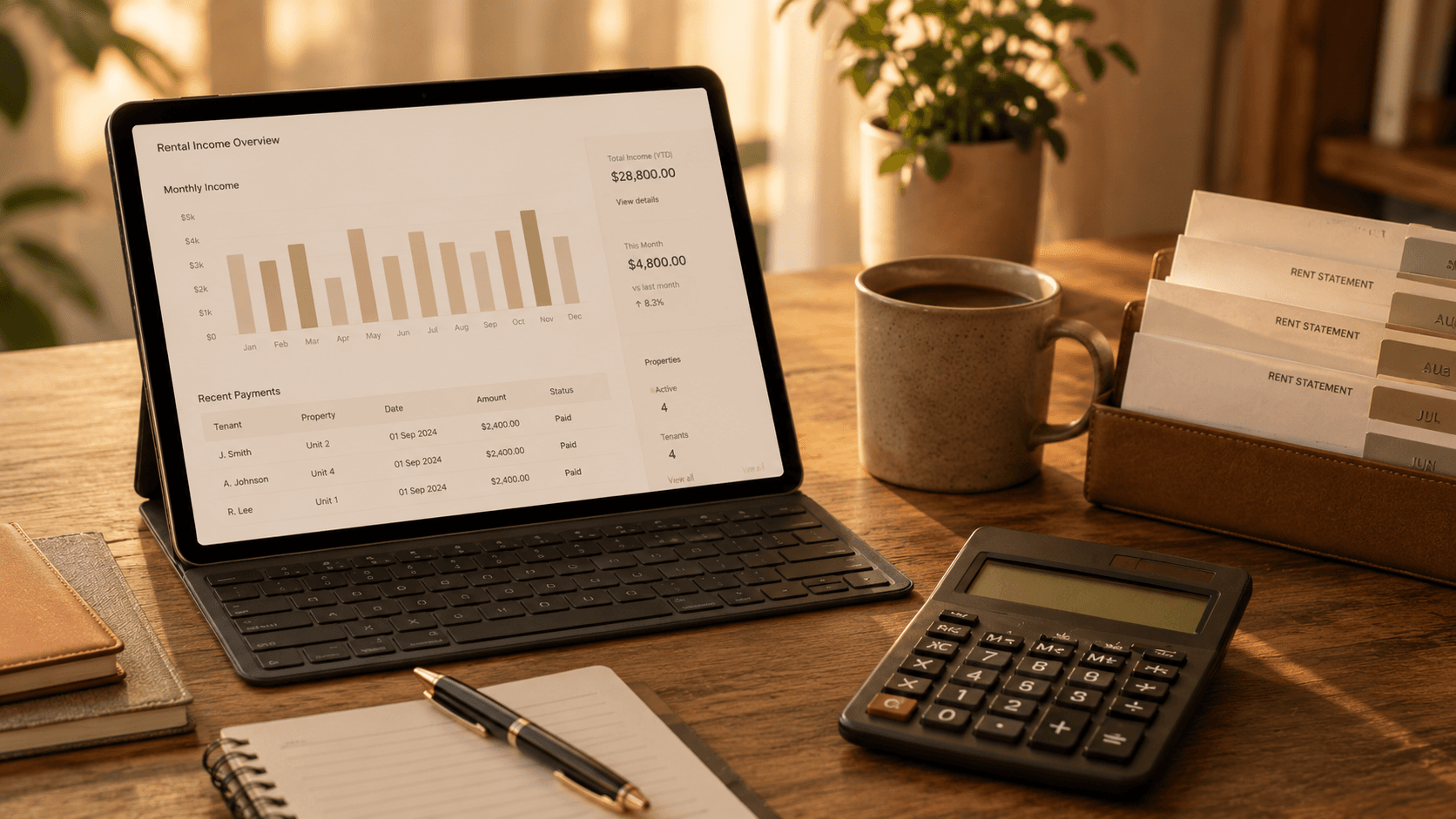
Landlord Wise is free during early access. Use it to organise rent income, expenses, receipts, documents and property records before tax time.
At a glance
- Declare rental income: the ATO says you must declare income from renting, leasing or licensing your rental property.
- Gross rent matters: the ATO example reports gross rent before property manager fees and expenses paid on the owners' behalf.
- Timing matters: the ATO says declare rental income in the year the tenant pays rent, including where it is paid to your agent or property manager.
- Keep records: rent statements, bank statements, leases and bond records support the income you declare.
- General information only: confirm your circumstances with current ATO guidance or a registered tax agent.
Part of the rental property tax guide hub
Use the Rental Property Tax Guide to read rental income with deductions, depreciation, negative gearing and tax-time records.
Rental income is generally part of your Australian tax return. The ATO says you must declare all income you receive from renting, leasing or licensing your rental property, including from overseas properties.
This guide explains the main rental income categories from the ATO source pack and how landlords can organise records. It is general information only and not tax advice.
What rental income must landlords declare?
The ATO page on rental income you must declare says rental income includes income from:
- short-term rentals
- renting through a sharing platform
- renting part or all of your home
- formal and domestic arrangements where you rent out to family and friends, whether for commercial rates or less than those rates.
The ATO also says rental income can be payments in cash or in the form of goods and services. If a payment is received as goods or services, you need to work out its monetary value.
Types of rental income the ATO lists
The ATO lists several payments that may relate to rental income, including:
- rent paid by a tenant to you, your agent or your property manager
- bond money you retain in place of rent or keep because of damage to the property
- letting and booking fees you retain when renters or holiday makers cancel a booking
- insurance payouts for damage from natural disasters or unexpected events, and for loss of rent
- money received from a relief fund in a disaster
- tenant payments to cover the cost of repairing property damage
- government rebates for buying a depreciating asset
- lump sum payments of rental income
- assessable amounts relating to limited recourse debt arrangements involving your rental property.
That does not mean every amount connected to a property is treated the same way. It means landlords need to identify what the payment is for and keep evidence.
Gross rent, property managers and timing
The ATO says you must declare rental income and related payments in the year the tenant pays rent. If the tenant pays rent to your agent or property manager, the ATO says to declare the income in the year the tenant pays them, not when it is later transferred to you.
The ATO example also says owners need to report gross rent before it is reduced by property management fees and expenses paid on their behalf by the property manager.
This is a common record-keeping trap. If your property manager deducts fees, repairs or other expenses before transferring the net amount to you, keep the full statement. You need the income and the expense details, not just the final bank deposit.
Co-ownership and rental income
The ATO says you need to declare rental income based on your legal ownership of the property. For example, if you own 50% of a property, you must declare 50% of the rental income.
If ownership is more complex, such as a trust, company, partnership, business of letting rental properties or family arrangement, get advice from a registered tax agent.
Domestic and family arrangements
The ATO distinguishes some domestic arrangements from rental income.
The ATO says payments from householders or family members that relate to family care or shared household expenses are domestic in nature. In those cases, the ATO says you do not declare the amount as income and cannot claim deductions for expenses.
However, the ATO also says amounts received in a shared household or family situation are assessable income to the extent they relate to providing a lease or licence for use of your property. If you rent to family or friends below market rent, the ATO guidance says deductions should be apportioned to exclude private or domestic use, and it may be fair and reasonable to limit deductions to the rental income derived.
This is a sensitive area. Do not guess. Check the ATO guidance and speak with a registered tax agent if the arrangement is not a normal commercial rental.
Rental income records to keep
The ATO’s rental property records guidance says income records include:
- statements or rental records from your property manager or managing agent
- a rent book or bank statements showing rental payments going into your account
- documents showing tenant leases
- documents showing bond money retained in place of rent.
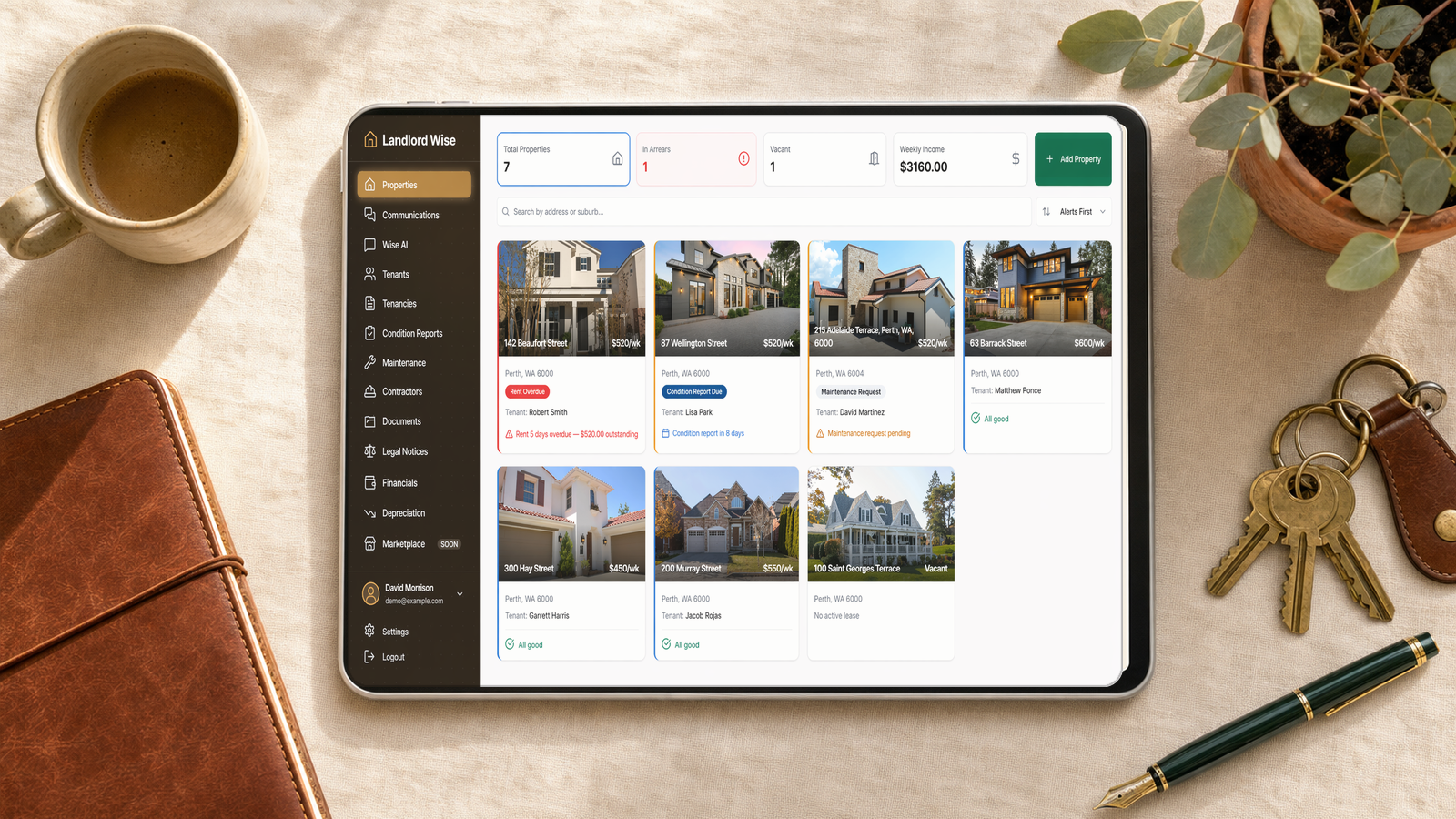
Landlord Wise helps self-managing landlords track rent, store tenancy documents, keep receipts and organise property records for tax time. It does not decide what income is assessable or lodge your return.
Rental income and expenses belong together
Rental income is only one side of the tax-time picture. The ATO worksheet works out net rental income or loss by listing rental income and other rental-related income, then subtracting rental expenses.
Once your income records are clean, work through Rental Property Tax Deductions Australia and the Rental Property Tax Return Checklist.
Frequently Asked Questions
Is rental income taxable in Australia?
The ATO says you must declare income received from renting, leasing or licensing your rental property in your tax return.
Do I declare rent when my property manager receives it or when I receive the transfer?
The ATO says that if your tenant pays rent to your agent or property manager, declare the income in the year the tenant pays them, not when it is transferred to you.
Do I declare bond money?
The ATO lists bond money retained in place of rent or kept because of damage to the property as a payment relating to rental income.
Do I declare insurance payouts?
The ATO lists insurance payouts for damage from natural disasters or unexpected events, and for loss of rent, as payments that may relate to rental income.
Can Landlord Wise track rental income for tax time?
Yes. Landlord Wise helps track rent income and store records by property. It does not provide tax advice or lodge your tax return.
Related guides and tools
- Rental Property Tax Deductions Australia
- Rental Property Tax Return Checklist
- Negative Gearing Explained
- Rental yield calculator
- Rental property cash flow calculator
- All Landlord Wise calculators
Disclaimer
This guide is general information for Australian residential landlords. It is not tax, legal or financial advice. Rental income treatment depends on the payment, ownership, use of the property and your circumstances. Check current ATO guidance and speak with a registered tax agent before lodging a tax return. Landlord Wise helps organise rental records, but it does not replace professional tax advice.
Related Guides
Most useful next-step guides for landlords.

Rental Property Tax Deductions Australia: Guide for Landlords
Plain-English guide to rental property tax deductions in Australia, including income, common expenses, depreciation, capital works and record keeping.

Rental Property Tax Return Checklist for Australian Landlords
EOFY rental property tax return checklist for Australian landlords, covering income records, expenses, repairs, depreciation, ownership and ATO record keeping.

Negative Gearing Explained for Australian Landlords
Plain-English guide to negative gearing in Australia, how net rental losses work, what records landlords need and how to use a negative gearing calculator carefully.

Rental Property Depreciation Australia: How to Calculate It
Learn the ATO-backed basics of rental property depreciation in Australia, including depreciating assets, capital works, second-hand asset limits and records.
How to Self-Manage a Rental Property in Australia (2026 Guide)
Learn how to self-manage a rental property in Australia, including tenant screening, leases, bonds, condition reports, rent records, maintenance and state rules.
Keep rental income, expenses, receipts and EOFY records together
Landlord Wise is free during early access. Use it to organise rent income, expenses, receipts, documents and property records before tax time.