
Free early access
Keep rental income, expenses, receipts and EOFY records together
Landlord Wise is free during early access. Use it to organise rent income, expenses, receipts, documents and property records before tax time.
At a glance
- Collect income records: rent statements, bank records, leases and retained bond records.
- Collect expense records: supplier, amount, nature of goods or services, date incurred and document date.
- Separate categories: ordinary expenses, repairs, capital works, depreciating assets and borrowing-related records need different treatment.
- Keep records: the ATO says rental income and expense records are generally kept for 5 years from 31 October, or 5 years from lodgement if you lodge later.
- General information only: this checklist helps organise records; it does not decide what you can claim.
Part of the rental property tax guide hub
Use the Rental Property Tax Guide to work through income, deductions, depreciation and negative gearing before tax time.
A rental property tax return is much easier when the records are already organised by property, financial year and category. This checklist is based on the downloaded ATO source pack, including the ATO Rental Properties Guide 2025, rental income guidance, rental expense guidance and record-keeping page.
Use it to prepare for your registered tax agent or your own tax return workflow. It is general information only and is not tax advice.
1. Rental income records
The ATO says rental income records include:
- statements or rental records from your property manager or managing agent
- a rent book or bank statements showing rental payments going into your account
- tenant leases
- documents showing bond money retained in place of rent.
Also check whether you have records for other rental-related income. The ATO lists items such as retained bond money, letting and booking fees, insurance payouts, tenant payments for deductible expenses, government rebates for depreciating assets and lump sum rental income.
For a fuller explanation, read Rental Income Tax Australia.
2. Rental expense records
The ATO says rental expense records must include:
- the supplier name
- the amount of the expense
- the nature of the goods or services
- the date the expense was incurred
- the date of the document.
If a document does not show the payment date, the ATO says to use independent evidence, such as a bank statement, to show the date you incurred the expense.
In Landlord Wise, store receipts and invoices against the relevant property so you are not rebuilding the year from emails and bank statements at EOFY.
3. Common expense categories to gather
The ATO worksheet and common expenses page point to practical categories landlords should gather before tax time, including:
- advertising for tenants
- body corporate fees and charges
- borrowing expenses
- cleaning
- council rates
- gardening and lawn mowing
- insurance
- interest on loans
- land tax
- legal expenses
- pest control
- property agent fees and commission
- repairs and maintenance
- capital works deductions
- deductions for decline in value
- water charges
- sundry rental expenses.
Do not treat this list as automatic approval. Some costs may be immediate deductions, some may be claimed over several years, and some may not be claimable.
4. Loan, interest and borrowing records
Gather loan documents and annual loan statements. The ATO’s record-keeping guidance lists loan documents as records you should keep, and the expense guidance treats interest and borrowing expenses differently.
Keep principal repayments separate from interest records. If a loan account has been used partly for rental property purposes and partly for private purposes, the ATO material says interest must be apportioned into deductible and non-deductible parts according to the use of the borrowed funds.
5. Repairs and maintenance records
The ATO says repair and maintenance expenses are costs incurred to keep the property tenantable or fix wear and tear or damage that occurs while renting it out.
For tax-time review, collect:
- invoices from tradespeople
- descriptions of the work performed
- dates the work was completed
- photos, inspection notes or maintenance requests showing why the work was needed
- itemised invoices where work included both repairs and improvements.
The ATO says if repairs and improvements are done at the same time, you can only claim the repair cost if it can be separated from the improvement cost.
6. Capital works and depreciating asset records
For capital works, gather documents for construction, structural improvements, alterations, extensions, major renovations, fences, garages, patios, driveways and retaining walls.
For depreciating assets, gather:
- purchase invoices
- date first used or installed ready for use
- asset description
- cost
- whether the asset was new or second-hand
- effective life information or professional report
- any spreadsheet, depreciation schedule or quantity surveyor report.
The ATO recommends keeping a spreadsheet as a minimum for depreciating assets and says a quantity surveyor can prepare a report when a rental property is purchased.
Use the depreciation calculator for planning and read How to Calculate Depreciation on a Rental Property before discussing claims with your tax agent.
7. Items to flag before lodging
The ATO source pack names several areas where landlords should slow down before treating a cost as deductible:
- travel expenses relating to residential rental properties are generally not deductible unless an exception applies
- vacant land holding costs are generally not deductible before the property can be occupied and is available for rent, unless an exception applies
- certain second-hand depreciating assets in residential rental properties have deduction limits
- personal use, below-market rent, mixed-use loans and capital expenses may need apportionment or different tax treatment.
Use this part of the checklist as a prompt for your registered tax agent, not as a final claim decision.
8. Ownership and co-owner details
The ATO says rental income and expenses must be declared according to legal ownership. If you own 50% of a property, the ATO says you must declare 50% of the rental income.
Before tax time, confirm:
- ownership percentage
- whether the property is owned individually, jointly or through another structure
- whether income and expenses have been allocated according to the correct ownership share
- whether any business, partnership, trust or company issues need professional advice.
9. CGT and sale-related records
If you sold or ceased to own a rental property, the ATO says you may make a capital gain or capital loss. The ATO also says keeping adequate records of expenditure helps you correctly work out the amount of capital gain or loss when a CGT event happens.
For a sale year, gather purchase records, sale records, legal fees, stamp duty, real estate agent commissions, capital works records and records of amounts deducted or able to be deducted that may affect the cost base.
CGT treatment can be high-stakes because sale-year records and cost-base adjustments may affect the final gain or loss. Use the ATO guidance and a registered tax agent before relying on a CGT calculation.
For more detail, see the ATO page on capital gains tax when selling your rental property.
10. Record retention check
The ATO says rental income and expense records must be in English or readily translatable into English.
The ATO also says to keep rental income and expense records for 5 years from 31 October, or, if you lodge later, for 5 years from the date you lodge your tax return. If you are in a dispute with the ATO that relates to your rental property at the end of that period, keep relevant records until the dispute is resolved.
For CGT records, the ATO gives a separate record-keeping rule. It says records that affect capital gains and capital losses must be kept for at least 5 years after the relevant CGT event. If you use those records in a later tax return, or if a capital loss is applied in a later income year, you may need to keep the records longer.
How Landlord Wise helps with the checklist
Landlord Wise helps landlords keep rent, expenses, leases, condition reports, maintenance records, documents and receipts organised by property.
It can help you prepare tax-time information, but it does not lodge tax returns, guarantee deductions or provide tax advice. Use Landlord Wise to organise the file, then use ATO guidance and a registered tax agent to decide the tax treatment.
Frequently Asked Questions
What records do landlords need for a rental property tax return?
The ATO lists rent statements, rental records, bank statements, leases, retained bond records, expense receipts, loan documents, land tax assessments, credit card records and rent records from managing agents.
How long should I keep rental property tax records?
The ATO says to keep rental income and expense records for 5 years from 31 October, or for 5 years from lodgement if you lodge later. Records may need to be kept longer if there is a dispute.
Should I separate repairs from improvements?
Yes. The ATO treats repairs, maintenance, improvements, initial repairs and capital works differently. Itemised invoices can help separate repair costs from improvement costs.
Do I need depreciation records for tax time?
If you are claiming decline in value or capital works deductions, keep asset records, dates, costs, effective life information and any spreadsheet, depreciation schedule or quantity surveyor report.
Can Landlord Wise prepare my tax return?
No. Landlord Wise helps organise property records and tax-time information. It does not lodge tax returns or replace a registered tax agent.
Related guides and tools
- Rental Income Tax Australia
- Rental Property Tax Deductions Australia
- How to Calculate Depreciation on a Rental Property
- Negative Gearing Explained
- Depreciation calculator
- Negative gearing calculator
- All Landlord Wise calculators
Disclaimer
This checklist is general information for Australian residential landlords. It is not tax, legal or financial advice. It is designed to help you organise records, not decide what you can claim. Check current ATO guidance and speak with a registered tax agent before lodging a tax return. Landlord Wise helps organise records and tax-time information, but it does not lodge tax returns or replace professional tax advice.
Related Guides
Most useful next-step guides for landlords.
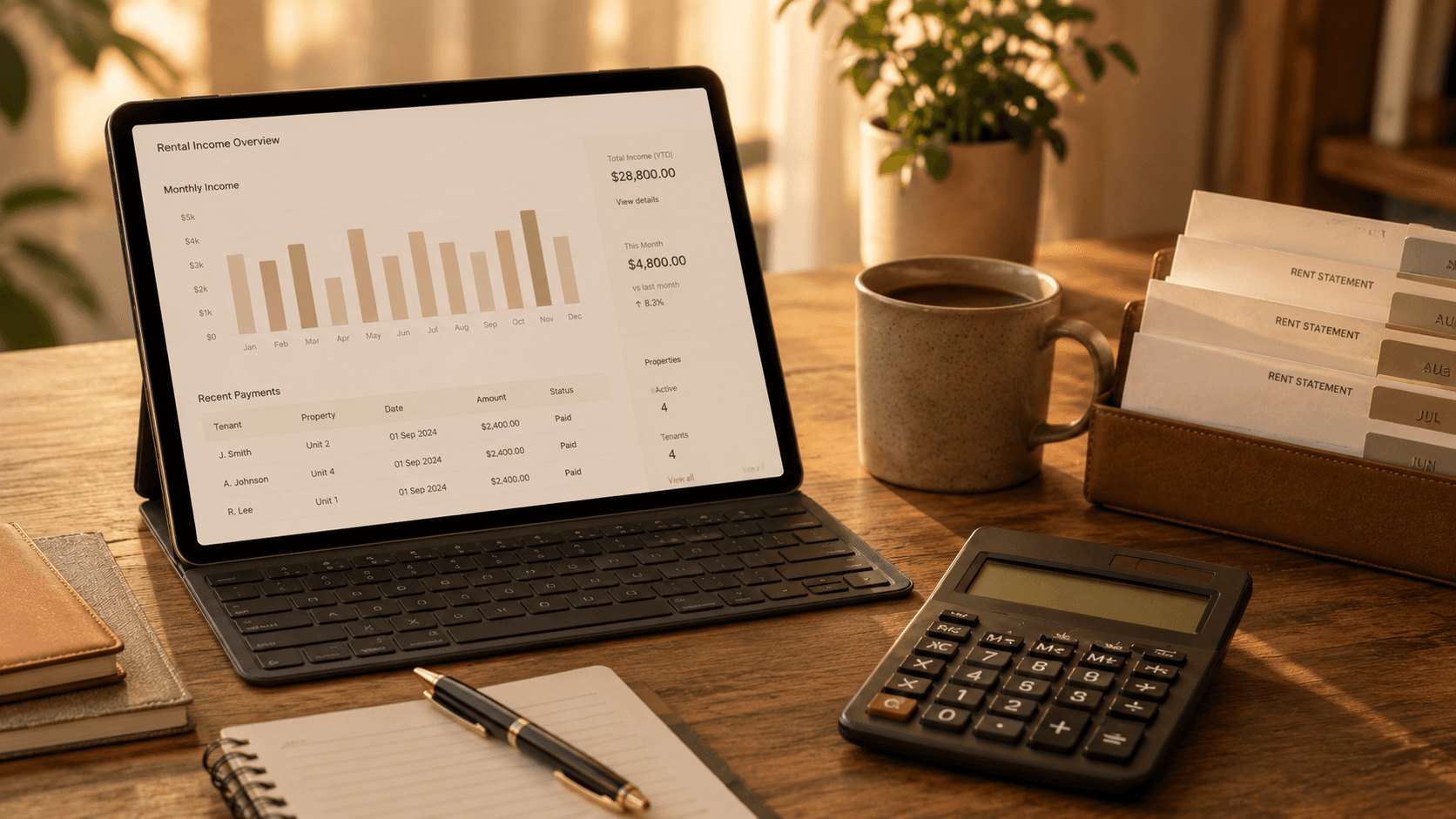
Rental Income Tax Australia: What Landlords Need to Declare
Guide for Australian landlords on rental income tax, what the ATO says to declare, common rental income types and record keeping.

Rental Property Tax Deductions Australia: Guide for Landlords
Plain-English guide to rental property tax deductions in Australia, including income, common expenses, depreciation, capital works and record keeping.

Negative Gearing Explained for Australian Landlords
Plain-English guide to negative gearing in Australia, how net rental losses work, what records landlords need and how to use a negative gearing calculator carefully.
Rental Property Depreciation Australia: How to Calculate It
Learn the ATO-backed basics of rental property depreciation in Australia, including depreciating assets, capital works, second-hand asset limits and records.
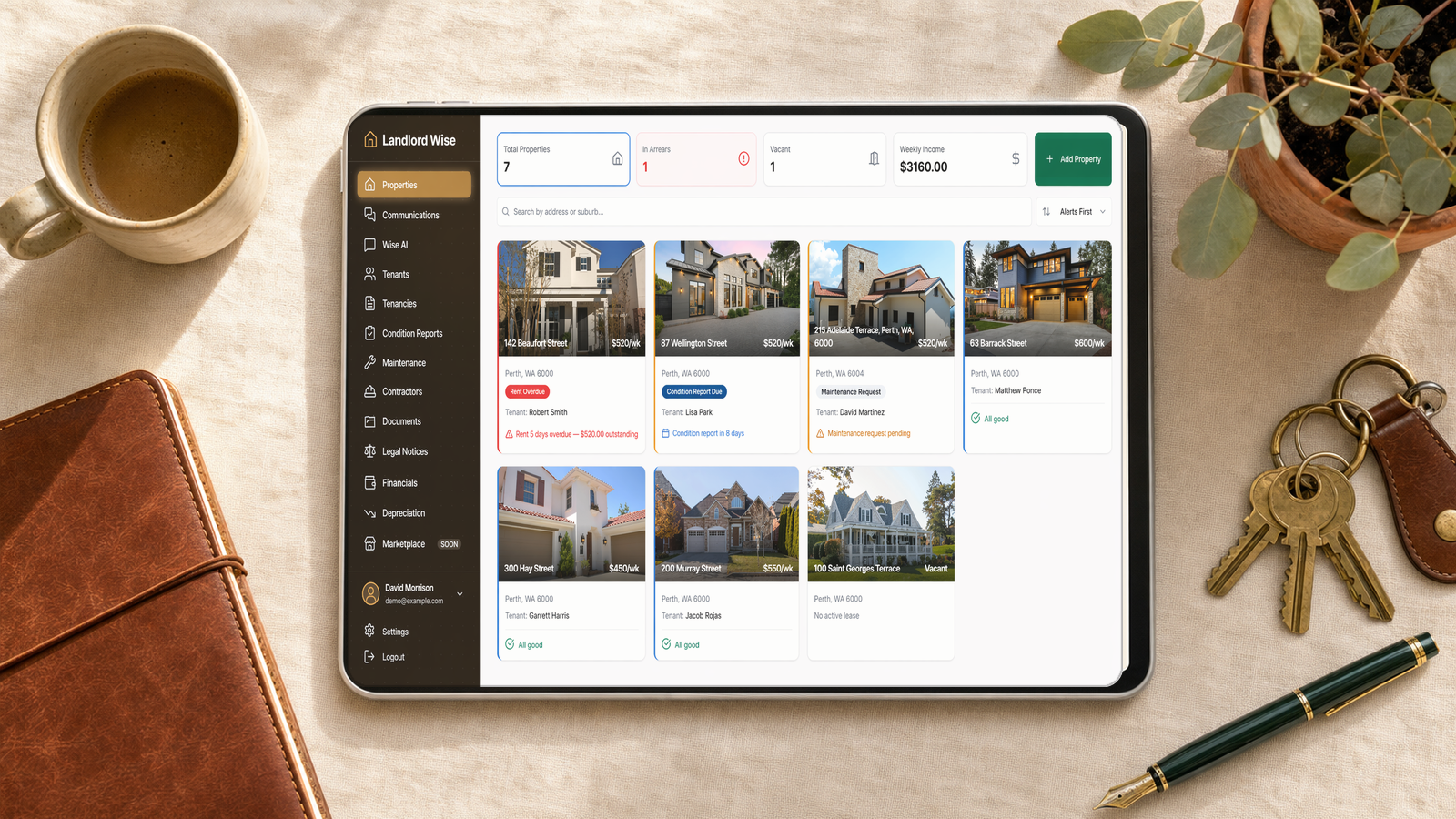
How to Self-Manage a Rental Property in Australia (2026 Guide)
Learn how to self-manage a rental property in Australia, including tenant screening, leases, bonds, condition reports, rent records, maintenance and state rules.
Keep rental income, expenses, receipts and EOFY records together
Landlord Wise is free during early access. Use it to organise rent income, expenses, receipts, documents and property records before tax time.